


China and the WTO: Why Multilateralism Still Matters – Petros Mavroidis and André Sapir
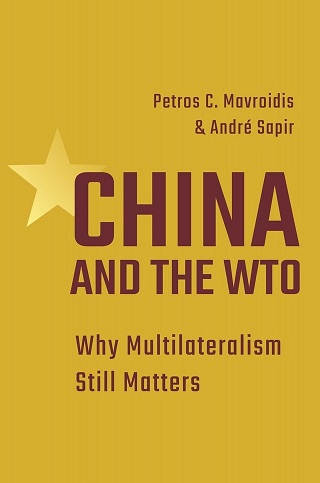
An examination of China’s participation in the World Trade Organization, the conflicts it has caused, and how WTO reforms could ease them
Princeton University Press 2021
China’s accession to the World Trade Organization (WTO) in 2001 was rightly hailed as a huge step forward in international cooperation. However, China’s participation in the WTO has been anything but smooth, with China alienating some of its trading partners, particularly the United States. The mismatch between the WTO framework and China’s economic model has undermined the WTO’s ability to mitigate tensions arising from China’s size and rapid growth. What has to change? China and the WTO demonstrates that unilateral pressure, by the United States and others, is not the answer. Instead, Petros Mavroidis and André Sapir show that if the WTO enacts judicious reforms, it could induce China’s cooperation, leading to a renewed confidence in the WTO system.
The WTO and its predecessor, the General Agreement on Tariffs and Trade, are predicated on liberal domestic policies. They managed the previous accessions of socialist countries and big trading nations, but none were as large or powerful as China. Mavroidis and Sapir contend that for the WTO to function smoothly and accommodate China’s unique geopolitical position, it needs to translate some of its implicit principles into explicit treaty language. To make their point, they focus on two core complaints—that Chinese state-owned enterprises (SOEs) benefit from unfair trade advantages, and that domestic companies, private as well as SOEs, impose forced technology transfer on foreign companies as a condition for accessing the Chinese market—and they lay out specific proposals for WTO reforms.
In an age of global trade disputes, China and the WTO offers a timely exploration of unprecedented challenges to the current multilateral system and fresh ideas for lasting solutions.
Latest News
EDT-Day – March 28th

The EDT STAT-ACTU is organizing its EDT-day on Friday March 28, 2025. It will take place in room “Salle des professeurs” on the 9th floor of the NO building (La Plaine, ULB). The program can be found below: Registration, free but compulsory, can be made on this page: Session 1 9.30am – 10am: Welcome (coffee and …
Continue reading "EDT-Day – March 28th"
Estelle Cantillon Organizes Belgian Environmental Economics Day (BEED 2025)
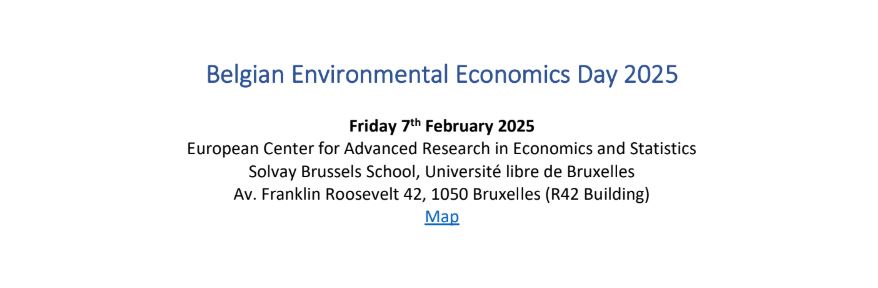
ECARES member Estelle Cantillon organized the Belgian Environmental Economics Day (BEED 2025), a key event for environmental economists in Belgium. The day brought together experts , and researchers to discuss pressing environmental issues through an economic lens. The event featured a series of presentations and discussions on various topics within environmental economics, providing a platform …
Continue reading "Estelle Cantillon Organizes Belgian Environmental Economics Day (BEED 2025)"
ECARES Welcomes Nobel Prize Laureate Jean Tirole for a Seminar
12 February 2025On February 6th, ECARES (Economics and Computing Research School) had the honor of welcoming Jean Tirole, the Nobel Prize-winning economist of 2014, for a prestigious seminar. Tirole, renowned for his groundbreaking work in industrial organization and market regulation, shared his insights on contemporary economic challenges. His presentation focused on his recent paper titled Engineering Commonality, …
Continue reading "ECARES Welcomes Nobel Prize Laureate Jean Tirole for a Seminar"
Visit us
ECARES - Solvay Brussels School of Economics and Management
Ave. F.D Roosevelt 42, 5th and 6th floors
1050 - Brussels - Belgium